




How to prepare your clinic for 2026: systems, staffing, and smarter workflows

Veterinary practices are entering a different kind of planning season for 2026. The pressures haven’t disappeared — staffing remains tight, caseloads continue to rise, clients expect faster communication, and documentation demands keep expanding — but the pattern of challenges is shifting.
Many clinics have already made the most obvious efficiency improvements. The next phase is must build stability by reducing operational friction, supporting teams with stronger workflows, and making strategic choices that keep doctors, technicians, and managers focused on the work that matters most.
The goal isn’t to overhaul everything at once. It’s to identify the parts of your operations that will matter most in 2026 and strengthen them with clarity, consistency, and tools that help the team work at their highest level.
Look for system gaps that limit veterinary clinic efficiency
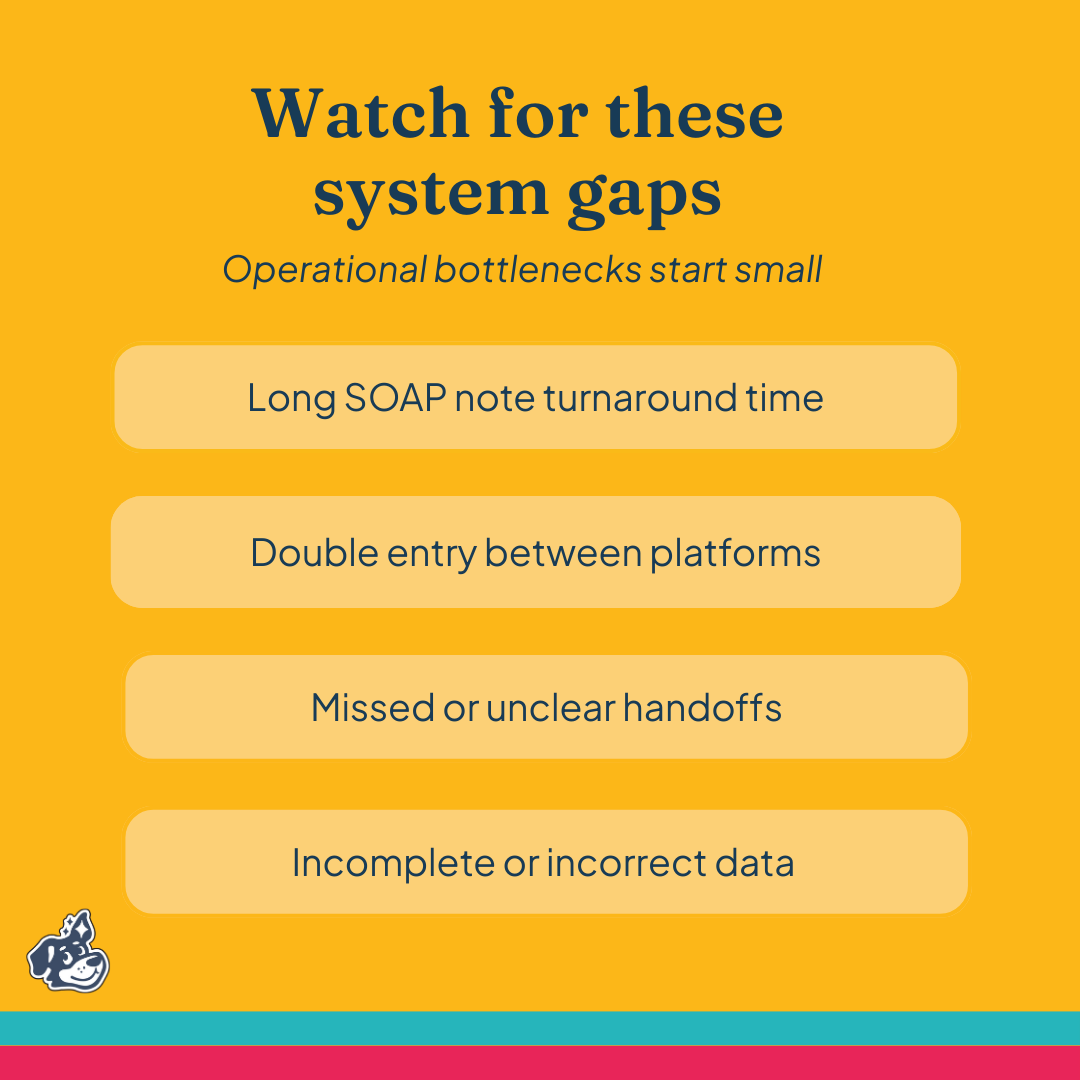
Before a clinic can plan effectively for 2026, it needs a clear view of where its systems are holding it back. Operational bottlenecks often start small, like a repeated handoff question, a documentation backlog, or a disconnect between client communication and medical workflow, but they compound quickly in a busy practice.
Start by examining the flow of information across your clinic.
Look for:
- long exam-to-note cycles
- repetitive or incomplete data capture
- double entry between platforms
- unclear handoffs between technicians, CSRs, and doctors
- reliance on memory instead of structured workflows
When patterns like these appear, they often point to system strain rather than performance issues.
Mapping the patient journey end to end is a powerful diagnostic step. It reveals where information gets stuck, lost, or delayed — the three most common causes of operational inefficiency in veterinary medicine.
Technology plays a meaningful role here, especially when it reduces administrative work rather than adding another task. Tools that support accurate, structured, real-time documentation help clinicians stay present in the exam room, reduce after-hours work, and provide managers with more reliable visibility into clinic operations.
Build a proactive veterinary staffing plan for 2026
Staffing remains one of the biggest challenges in veterinary operations, but many clinics approach it only when something breaks. For 2026, practices benefit from shifting toward proactive staffing models that account for predictable demand, seasonal variation, and role clarity.
Start by forecasting the year ahead:
- expected caseload trends
- doctor availability
- seasonal shifts in appointment types
- training and onboarding windows
- known PTO patterns
This helps practice managers anticipate capacity issues before they disrupt the schedule.
Cross-training is a high-impact strategy for stabilizing the team. When CSRs can support intake or assistants can float between processes, the clinic becomes more resilient during unexpected absences or heavy appointment days.
Support hiring should also be viewed through the lens of leverage. Instead of increasing headcount broadly, identify where doctors and RVTs lose the most time — typically documentation, callbacks, and administrative coordination. Redirecting that time, whether through role adjustments or intelligent documentation tools, can dramatically reduce burnout and improve the clinic’s daily flow.
Use a whole-clinic perspective to evaluate clinic workflows
Review your workflows through the lens of the entire patient journey. Each step has its own operational weight. When one slows down, the entire day feels it.
Trace the complete patient journey and look for friction points such as:
- repeated questioning due to incomplete or disconnected client information
- phone bottlenecks that choke CSR capacity
- unclear next steps at checkout or during follow-up
- delayed or inconsistent documentation affecting charge capture
- clinicians shifting attention between note-taking and diagnostics
None of these are signs of poor performance — they are structural friction points.
When managers step back and observe the flow as an ecosystem rather than a series of isolated tasks, the source of inefficiency becomes much easier to find.
One of the most overlooked sources of operational drag is documentation delay. Notes completed hours after the appointment are naturally less accurate, harder to reconstruct, and more mentally taxing for clinicians. Over time, that contributes to missed charges, incomplete histories, and fatigue.
Clinics preparing for 2026 should evaluate workflows with an eye toward real-time documentation. Intelligent exam-room tools that capture medical details accurately make it possible to complete notes during or immediately after the visit. This improves care continuity, keeps handoffs clean, and reduces the emotional and cognitive load clinicians carry home.
Choose veterinary technology that improves workflow efficiency
Technology adoption in veterinary medicine continues to accelerate, but not all tools are built for the realities of a modern clinic. The best tools for 2026 will strengthen operational foundations, not increase complexity.
When evaluating technology for the year ahead, look for:
- workflow integration: Does it reduce steps or add steps?
- accuracy with medical terminology: especially in fast-paced exam-room conversations
- performance in real environments: multi-speaker, noisy, unpredictable
- direct team value: time saved, errors reduced, clarity added
- structured data output: supports analytics, quality improvement, and charge capture
The standout tools will be those that quietly remove friction, not those that demand new processes or constant oversight.
AI-powered veterinary documentation assistants, including platforms like Happydoc, are increasingly attractive because they help clinics reclaim time without altering the core flow of care. They reduce after-hours documentation, improve note consistency across doctors, and create clearer operational visibility for managers reviewing trends.
Set clinic priorities you can actually track and deliver on
Strategic planning only works when the goals are both clear and practical. Instead of creating a long list of improvements, focus on the areas that will deliver the most operational value.
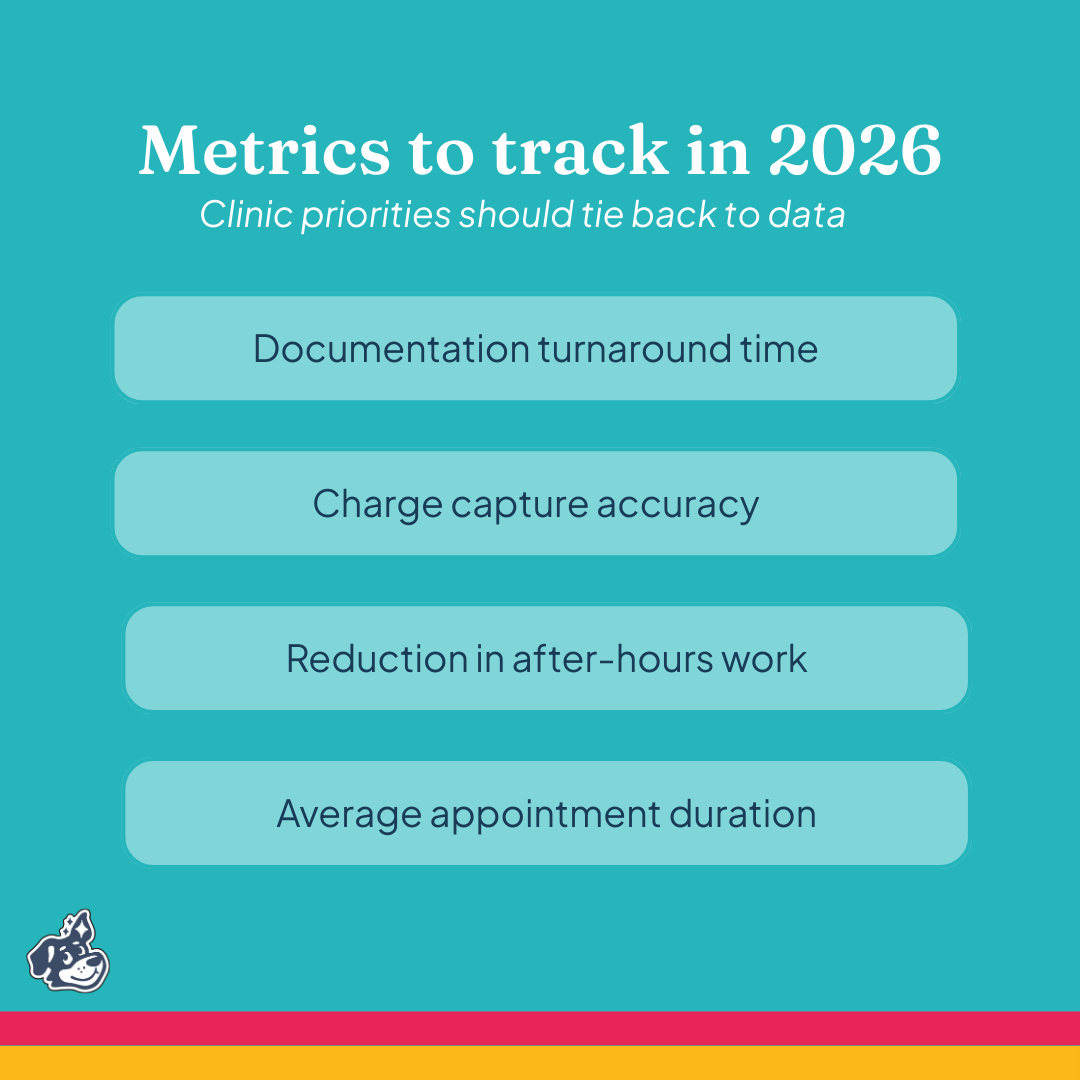
Effective clinics set three to five priorities tied to specific metrics, such as:
- documentation turnaround time
- charge capture accuracy
- reduction in after-hours work
- appointment throughput without additional strain
- technician and CSR utilization
Define who owns each initiative and establish a monthly or quarterly review rhythm to ensure progress continues beyond Q1.
Smaller, consistent improvements outperform large, unfocused changes, especially in a veterinary environment where the unexpected is a given.
Bring your veterinary team into the conversation early
Strategic planning thrives when the people doing the work help shape the plan.
DVMs, RVTs, CSRs, and assistants see operational patterns leaders may never notice. When they participate in identifying gaps and setting goals, they build ownership and alignment.
Use regular feedback loops — short, structured conversations that focus on what’s working, what’s slowing the day down, and where the team feels stretched. Transparency reduces tension and creates a shared language around improvement. And when changes do roll out, teams understand the “why” because they helped define it.
Clinics that involve their team early run more smoothly, make better technology decisions, and see faster adoption of new processes because the work reflects real needs, not assumptions.
Strong veterinary operations in 2026 rely on clarity, consistency, and smarter workflows
Preparing for 2026 doesn’t mean overhauling every system.
Strong clinics move into the year with systems that reduce friction, staffing plans that reflect the reality of their caseload, workflows that support the entire patient journey, and documentation practices that strengthen both care and clinician well-being.
When those pieces are in place, clinics operate with more stability and less friction. Teams feel supported. Clients experience smoother communication. Care improves because clinicians can stay focused on their patients instead of juggling the invisible workload of documentation and manual processes.
A strong 2026 starts with thoughtful planning and the right systems to bring that plan to life.
Transform your clinic with HappyDoc
Let HappyDoc help you transform your entire approach to patient care. Your clinic's staff will have a personalized AI assistant that works alongside you so you can be free to focus on what matters: your patients.
Schedule a demo to find out how your clinic can operate at its full potential, providing the highest level of care to every patient, every time.


.png)

.png)


